SCHMALZ 10.01.02.00567 Spring Plunger 814GZ6
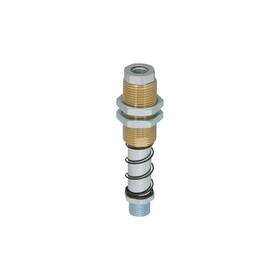
( Brand: Schmalz ), ( Manufacturer Part Number: 10.01.02.00567 )
Review SCHMALZ Spring Plunger
The Schmalz 10.01.02.00567 spring plunger 814gz6 is a versatile component in vacuum automation technology, designed for use in handling applications that require gentle product handling. This plunger is part of Schmalz's 800 series, which is known for its robustness and reliability.
The plunger features a spring-loaded design, allowing it to be easily actuated with minimal force. The plunger rod is made of stainless steel, ensuring durability and resistance to corrosion. The plunger body, on the other hand, is made of high-quality polyamide, which provides excellent resistance to impacts and abrasions.
The plunger's sealing surface is made of food-grade EPDM rubber, making it suitable for handling food products. The rubber is also resistant to aging, ensuring consistent sealing performance over time. The plunger's diameter is 81.4mm, and it has a stroke length of 35mm.
The Schmalz 10.01.02.00567 spring plunger 814gz6 is designed to be used with Schmalz vacuum grippers, such as the GripLine and PowerLine series. It can be easily integrated into vacuum automation systems, enabling precise product handling and reliable suction.
The plunger's compact design allows it to be used in tight spaces, making it a popular choice for applications where space is limited. It is also easy to maintain, with no wearing parts that require regular replacement. The plunger can be cleaned with water and mild detergent, making it ideal for use in hygienic environments.
In summary, the Schmalz 10.01.02.00567 spring plunger 814gz6 is a high-performance component in vacuum automation technology, designed for gentle product handling in a variety of applications. Its spring-loaded design, durable construction, and easy maintenance make it a popular choice among vacuum automation engineers and operators.
A Comprehensive Analysis of Schmalz 10.01.02.00567 Spring Plunger 814gz6
The Schmalz 10.01.02.00567 Spring Plunger 814gz6 is a vacuum component used in automation technology for handling and lifting applications. This analysis aims to provide an insightful examination of the product's advantages, disadvantages, and a concluding recommendation.
Advantages of Schmalz 10.01.02.00567 Spring Plunger 814gz6:1. Durability: The Schmalz 814gz6 spring plunger is designed to withstand heavy-duty applications, ensuring reliable operation even under extreme conditions.
2. Versatility: This component is suitable for various handling and lifting tasks due to its adjustable stroke length and wide range of available sizes.
3. Reduced energy consumption: The use of a spring plunger instead of an air cylinder significantly reduces energy consumption, making it a cost-effective option for automation processes.
4. Easy maintenance: The simple design of the spring plunger reduces the need for frequent maintenance, saving time and resources.
Disadvantages of Schmalz 10.01.02.00567 Spring Plunger 814gz6:1. Limited force capacity: The spring plunger has a lower force capacity compared to an air cylinder, which may limit its applicability for certain heavy-duty tasks.
2. Limited stroke speed: The stroke speed of the spring plunger is slower than that of an air cylinder, which could impact the overall efficiency of the automation process.
3. Limited stroke length: The adjustable stroke length is limited, which may not be suitable for applications requiring longer strokes.
Conclusion:The Schmalz 10.01.02.00567 Spring Plunger 814gz6 is a valuable addition to automation technology for handling and lifting applications due to its durability, versatility, energy efficiency, and easy maintenance. However, its limited force capacity, stroke speed, and stroke length may not make it the best option for heavy-duty tasks requiring significant force or longer strokes.
Recommendation:Based on the analysis, the Schmalz 10.01.02.00567 Spring Plunger 814gz6 is recommended for applications where energy efficiency, easy maintenance, and versatility are essential requirements. However, for applications requiring heavy-duty tasks with significant force or longer strokes, an air cylinder may be a more suitable option. Ultimately, the choice depends on the specific requirements of the automation process.
Details:
Power adapters and other modifications may be necessary for proper operation in countries.
part #: 10010200567 prices
- $79.95-$159.32
specifications diswashepar:
- brand: Schmalz
- mpn: 10.01.02.00567
payments diswashepar:
- wallet: Apple-pay
- credit card: Diners-club
- other
returns diswashepar:
- paid by: Seller
- time: 30 Days
- policy: Returns Accepted
- method: Money back
shipping diswashepar:
- class: Standard
- transit: 3-5 Days
- cost: $0.00
- service: UPS Ground
- type: Fixed
- carrier: UPS
general diswashepar:
- Major Appliances > Major Appliances Parts Accessories > Dishwasher Parts
- condition: New
offer diswashepar:
- options: Ship-to-home
- quantity: 6
- availability: In Stock
- sold: 0
- started: December 12, 2025
seller diswashepar:
- # reviews: 129359
- city: Minooka, Illinois
- rating: 99.7%
Schmalz 10.01.02.00567 Is Similar To:
- Schmalz 10.01.02.00609 Spring Plunger (86.4% similar) Electrical outlet's. Electrical boxes. Receptacles. Light industrial. And enclosures...(April 23rd, 2025)
- Schmalz 10.01.02.00568 Spring Plunger (88.9% similar) Electrical boxes. And enclosures. Electrical outlet's. Light industrial. Receptacles...(April 24th, 2025)
- Schmalz 10.01.02.00569 Spring Plunger (88.9% similar) Light industrial. Receptacles. Electrical boxes. And enclosures. Electrical outlet's...(May 5th, 2025)
- Schmalz 10.01.02.00604 Spring Plunger (86.4% similar) Electrical boxes. And enclosures. Light industrial. Electrical outlet's. Receptacles...(October 21st, 2025)
- Schmalz 10.01.02.00603 Spring Plunger (86.4% similar) Electrical boxes. Receptacles. Electrical outlet's. Light industrial. And enclosures...(October 22nd, 2025)
- Schmalz 10.01.02.00608 Spring Plunger (86.4% similar) Electrical outlet's. And enclosures. Electrical boxes. Light industrial. Receptacles...(April 20th, 2026)
